
01
Settle it in cash
The cheapest route in total terms and the one requiring the most liquidity on a single day. Where the business has planned for it, this ends the arrangement with the asset owned outright and nothing further owed.
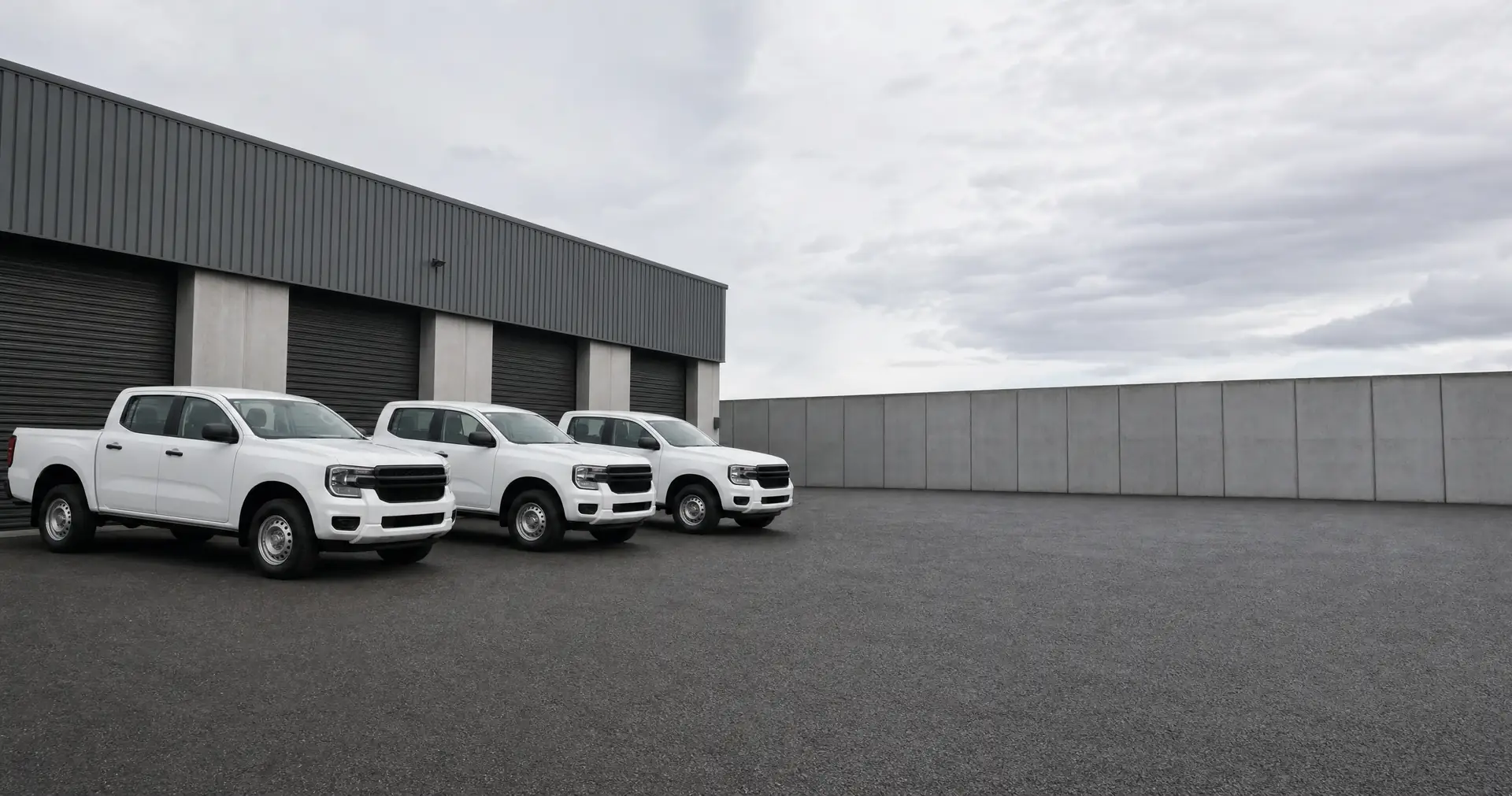
Most of the cost of an asset finance facility is settled in the first month. Most of the avoidable cost is settled in the last one, by a business making a choice it had not thought about until the letter arrived.
The short version
Where the decision was made
A business three months from the end of a term has less room than it thinks. The residual amount is in the contract, the return conditions are in the contract, and the choice between structures was made four years ago. What remains open is how the residual is met and what the asset does next, and those are real choices worth making deliberately.
The reason this catches businesses out is that the middle of a facility is uneventful. Payments go out, the machine works, and nothing requires attention for years. The end arrives as a piece of correspondence in a busy month and gets handled quickly, which is exactly the condition under which the expensive option gets chosen.
The remedy is unremarkable. A note in the calendar three months before the end, a look at what the asset is worth, and a conversation with the financier turn an urgent decision into an ordinary one. That is close to the whole of the advice, and it is worth more than any of the detail that follows.
Fixed at inception
The residual
Fixed at inception
The return conditions
Open at the end
How the residual is met
Not open at the end
Whether there is one
By structure
General descriptions of how each structure ordinarily ends. The agreement itself governs any particular case.
| Structure | What happens | What is owed | Who holds the asset |
|---|---|---|---|
| Hire purchase | Title passes on the final payment | Nothing | The business |
| Chattel mortgage | The security interest is discharged | Nothing | The business, throughout |
| Secured asset loan | The loan is repaid and the interest discharged | Nothing | The business, throughout |
| Finance lease | The residual falls due | The residual | Depends on how the residual is met |
| Operating lease | The asset is returned | Any condition or excess-use charges | The financier |
| Balloon structure | The balloon falls due | The balloon | The business, once it is met |
Indicative of how each structure ordinarily concludes. Not a substitute for the agreement.
The four routes
Where a lump sum falls due at the end of a term, these are the routes. They are not equally priced and they are not equally available to every business.
01
The cheapest route in total terms and the one requiring the most liquidity on a single day. Where the business has planned for it, this ends the arrangement with the asset owned outright and nothing further owed.
02
A new facility over the residual amount, ordinarily on a shorter term. It costs more in total because interest runs again on the same money, and it is the route businesses reach for when the date arrives unplanned.
03
Where the machine is worth more than the residual, a trade against a replacement settles it and contributes to the new deposit. Where it is worth less, the shortfall carries into the new facility, which is where negative equity begins.
04
Available under some arrangements and not under others. Where the return option exists, the condition provisions apply, and where it does not, handing the asset over does not by itself extinguish the obligation.
Worked example
A four-year finance lease over a $100,000 asset carried a 30% residual, so $30,000 falls due. The asset is realistically worth around $34,000 in trade, and the business intends to keep operating a machine of this kind either way.
Settling in cash costs $30,000 today and ends it. Refinancing over two years at an indicative 12% costs roughly $34,000 in total, so the deferral costs about $4,000. Trading against a replacement clears the residual and leaves about $4,000 toward the new deposit, which ordinarily leaves the business in the strongest position where a replacement was going to happen anyway. Handing it back, where the arrangement allows it, costs nothing directly and gives up $4,000 of value the business had.
The order changes entirely if the machine is worth $26,000 instead of $34,000. Trading then leaves a $4,000 shortfall rolling into the next facility, and handing it back becomes the strongest option rather than the weakest. Which situation applies is a question about the asset, and the answer is available months before the decision has to be made.
Illustrative figures
Illustrative on stated assumptions and rounded. Not a quote or offer of credit.
The refinance route
Refinancing a residual is the route taken when a business runs out of time. It is quick, it requires no cash, and the financier is generally willing because the asset is known and the amount is modest against what has already been repaid. Nothing about it is wrong, and it is more expensive than every alternative except the one that produces negative equity.
The cost is interest running a second time on money that has already carried interest for the full original term. On a $30,000 residual over two years the additional cost is measured in thousands rather than hundreds, which is a real number against an amount that was always going to fall due.
It is also worth noticing what refinancing does to the next cycle. An asset now five or six years old, carrying a fresh facility, is harder to trade cleanly and produces a weaker position at the end of the extension than the business had at the end of the original term. That is not an argument against the route. It is an argument for choosing it rather than arriving at it.
Returns
Condition
An operating lease return is assessed against condition standards written into the agreement. Ordinary use is expected and priced in. Damage, missing components, non-standard modifications and deferred servicing are not.
The charges arrive after the last payment, which is what makes them feel unfair even where they are contractual. A business that budgeted for the lease as a fixed monthly cost is looking at an unexpected invoice on an arrangement it considered finished.
A read of the condition schedule with three months left, rather than three weeks, leaves time to put right the things that are cheaper to fix than to be charged for.
Usage
Where an agreement caps usage, exceeding it produces a charge at a rate set in the contract. On vehicles this is measured in kilometres and on plant it is commonly hours.
The figure is knowable at any point in the term, which is what makes an overrun avoidable. A business tracking against the cap halfway through can adjust how the asset is deployed, or negotiate the cap, in a way that is no longer available at the end.
Where an overrun is unavoidable, raising it with the financier early is ordinarily better received than presenting it at return, and it occasionally produces a different answer.
The tax point
Trading a depreciated asset above or below its adjusted tax value ordinarily produces an adjustment in the year of disposal, subject to the accountant’s confirmation. It is easy to overlook because attention at that moment is on the replacement and its finance rather than on the machine leaving. Where the adjustment is material, knowing about it before the year ends is considerably more useful than finding it in the return.
Three months out
01
The residual amount, whether a return option exists, the condition standards and any usage caps are all in the document signed years earlier. Very few businesses have looked at it since. Twenty minutes with it establishes what the actual choices are rather than what they are assumed to be.
02
Trade value rather than replacement value, from a dealer or from comparable listings. The gap between that figure and the residual is what decides which route is cheapest, and it is the single most useful number in the whole exercise.
03
Financiers deal with this every day and will ordinarily set out the routes available under the specific agreement. Having that conversation early tends to produce more flexibility than having it late, because there is still time for an alternative to be arranged.
When it goes wrong
None of these is unusual. All three trace to the same cause, which is a decision made under time pressure that could have been made calmly.
The business has no cash set aside and no valuation in hand, so the only route available in the time remaining is a refinance at whatever terms are offered.
What happens:Several thousand dollars of avoidable interest, and an older asset carrying a fresh facility into the next cycle.
A residual set optimistically at inception, or an asset that has taken heavier use than expected, leaves a shortfall on trade that rolls into the replacement facility.
What happens:Negative equity carried forward, which compounds if the same pattern repeats on the next term.
Condition issues and excess usage that were visible for months are assessed at once, after the final payment, on an arrangement the business considered closed.
What happens:An unbudgeted invoice, and a poor basis for negotiating the next arrangement with the same financier.
The common remedy for all three is timing rather than money. A business that starts looking at the ending three months out has every route open to it. A business that starts three weeks out has one.
The whole of it
A residual is not a surprise. It was written into the contract, it has been sitting there for four years, and the only thing that makes it feel like one is nobody having looked at it since the day it was signed.
Before the end
Not every ending happens on schedule. A business selling an asset mid-term, replacing it earlier than planned, or simply holding surplus cash it would rather deploy against a facility is asking a different question from the one this guide has been answering, and the mechanics are worth knowing because they are frequently misunderstood.
An early settlement figure is ordinarily not the remaining principal. The agreement governs how unearned interest is treated and whether any break cost applies, and the resulting number can sit meaningfully above what a straightforward subtraction would suggest. Obtaining it in writing before committing to a sale is what avoids an unpleasant difference at settlement, and it takes a phone call.
Lease structures are ordinarily less accommodating than purchase structures here, because the financier owns the asset and priced the arrangement on a full term. An early termination figure on a finance lease can include a substantial part of the remaining rentals, which is why a business that expects to exit early is frequently better served by a shorter term at a higher payment than by flexibility it assumed was there.
Where the facility is being cleared to sell the asset, one further step is worth taking. A discharge on the register follows settlement rather than accompanying it, and confirming it has been filed protects the buyer and the seller both. It is the same search run once more, and it closes the transaction properly.
The refinance route, priced
A residual refinanced over a shorter term is an ordinary facility, and this is what one costs. Comparing it against settling in cash is the arithmetic that decides the route. Indicative only, and not a quote or offer of credit.
Indicative repayment
Weekly
$326/week
Indicative only. Not a quote or offer of credit. Actual rates, fees, and repayments depend on the business profile and the lender's decision.
Sending to Prospa
2 years at 12.00% . Prospa will ask a few quick questions, then provide a firm quote and funding if eligible.
Redirecting…
Method
The descriptions of how each structure ends are general. Agreements vary considerably between financiers, and a return option, a condition standard or an early settlement provision that exists in one contract may be absent from another. Where a specific ending is in question, the agreement itself is the authority and the financier is the source of the actual figures.
Nothing here is tax or financial advice. The disposal adjustment described in this guide depends on facts specific to the business and is a question for its accountant, and this site is not a chartered accountant or a registered financial adviser.
References
The published source for the disposal adjustment described on this page.
Context for how a disposal in a given year interacts with a business’s wider tax position.
Backs the point that a discharge is filed when a facility is settled, and is worth confirming rather than assuming.
The regulator whose guidance covers conduct in consumer credit, referenced for context on how agreements are expected to be presented.
Referenced for the point that the disposal adjustment is a question for a chartered accountant.
FAQ
Title passes on the final payment and nothing further is owed. There is no lump sum, no decision and no exposure to what the asset turns out to be worth, which is the practical attraction of the structure.
The residual agreed at inception falls due. It is met by settling it in cash, refinancing it, trading the asset against a replacement, or where the arrangement allows it, returning the asset. Which routes are available is set by the agreement.
Ordinarily a financier will consider it, because the asset is known and the amount is modest against what has already been repaid. It is not automatic, it depends on the business’s position at the time, and it is the most expensive of the routes that do not involve giving up value.
Interest runs a second time on money that already carried interest for the original term. On a $30,000 residual over two years at an indicative 12% the additional cost is in the order of $4,000, which is illustrative rather than a quote.
The position where the asset is worth less than the amount still owed against it. Trading in that position rolls the shortfall into the next facility, which starts the new term already behind and compounds if the pattern repeats.
It is defined in the agreement rather than by a general standard. Ordinary use is expected and priced in, while damage, missing components, non-standard modifications and deferred servicing ordinarily are not. Reading the schedule with time left is what makes it manageable.
Frequently, because the usage figure is knowable throughout the term. A business tracking against the cap halfway through can adjust deployment or raise it with the financier, both of which are easier then than at return.
Trading a depreciated asset above or below its adjusted tax value ordinarily produces an adjustment in the year of disposal, subject to the accountant’s confirmation. It is easy to overlook when attention is on the replacement.
Ordinarily yes, and the amount required is a matter for the agreement. Early settlement figures are not always simply the remaining principal, so obtaining the figure in writing before committing to a sale or a trade avoids an unwelcome difference at settlement.
Around three months gives room for every route to stay open. At three weeks the practical choice narrows to whatever can be arranged quickly, which is ordinarily the most expensive option available.
That is the comfortable position. Trading clears the residual and contributes to the deposit on a replacement, or the asset can be settled and sold with the surplus retained. Both routes are only available to a business that knows the value in advance.
No. It describes how these arrangements ordinarily conclude. The agreement governs any particular case, this site is not a registered financial adviser, and the tax question belongs with an accountant.
Related
Balloon and residual structures
Where the lump sum at the end comes from.
Read onFinance lease
The structure that most often ends with a residual due.
Read onOperating lease
The structure that ends with a return and a condition assessment.
Read onReplacing an ageing asset
The decision the end of a term usually triggers.
Read onHow residuals and balloons work
The mechanism behind the figure that falls due.
Read onDisclaimer
Financing a machine is a commitment that runs for years, and the repayments come out of the same operating cash flow as everything else. Modelling the weekly and monthly cost against the working-capital position before committing is what this site is built for. Borrowing at a level that stays comfortable through a quiet quarter, rather than only through a strong one, is widely regarded as the safer frame.
What this site is
A calculator and information tool. Not a lender, not a broker, not a registered financial adviser. Nothing here is personalised financial advice.
What the figures show
Modelled estimates based on the inputs shown. Not a quote. Not an offer of credit. Not a guarantee of approval, rate or fees.
What the lender decides
Final rates, fees, and approval are set by the lender after a CCCFA-appropriate assessment of the applicant's circumstances and credit decision.
Commercial disclosure
Assetfinance.org.nz earns a commission from Prospa when a visitor applies through this site and their application is approved. The commission is paid by Prospa, not by the borrower, and it does not influence the rate Prospa offers. Full disclosure on the partner page.
Tax, GST, and accountant framing
Tax-treatment statements (GST claim timing, interest deductibility, depreciation rates) are general in nature and subject to the accountant's confirmation on the specific business position. For material amounts, professional advice from a registered financial adviser or chartered accountant is widely regarded as the safer frame.