
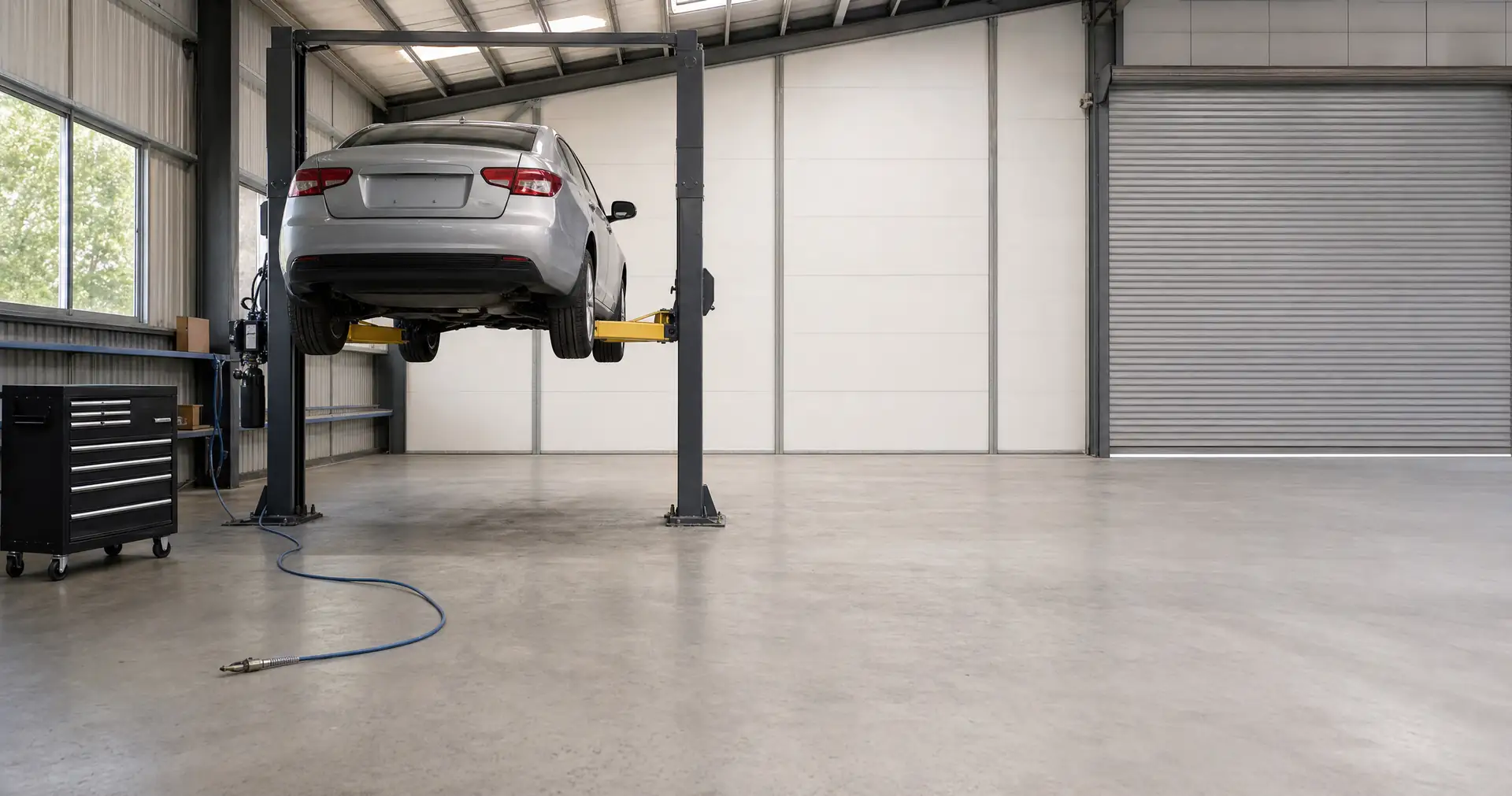
Secured asset loans for New Zealand businesses.
A term loan with equipment as the security rather than a purchase agreement. The one structure here that starts with an asset the business already has.
Last reviewed 8 September 2026
Indicative repayment
Weekly
$467/week
Indicative only. Not a quote or offer of credit. Actual rates, fees, and repayments depend on the business profile and the lender's decision.
Sending to Prospa
Your $60,000 scenario
3 years at 13.00% . Prospa will ask a few quick questions, then provide a firm quote and funding if eligible.
Redirecting…
The short version
Secured asset loans in four lines.
- The asset is already owned. Nothing is being bought. The business grants security over plant it holds and receives a lump sum it can use for any purpose.
- It prices between the two extremes. Below an unsecured facility because there is real security, and above a purchase facility because the asset is used and the lender is funding a need rather than an acquisition.
- Lenders lend on value, not on cost. The advance is set against what the asset would realise now, which on used plant is commonly well below what the business paid and what it is worth to the business.
- Indicative only. Every band on this page is illustrative. Actual rates, fees and terms come from the lender after assessment of the business and the specific asset.
What it is
A loan, secured by something the business already has.
Every other purchase structure on this site funds an acquisition. This one does not. A business that owns plant outright has capital locked inside it, and a secured asset loan converts part of that back into cash while the business keeps using the asset exactly as before.
The lender advances a proportion of what the asset would realise if it had to be sold, takes a security interest registered on the PPSR, and is repaid on a fixed schedule. The proportion matters and it is where expectations most often break. A lender is not lending against what the business paid, nor against what the asset is worth to the business as a going concern; it is lending against a forced-sale figure, which on used plant is commonly a good deal less than either.
What the money is for is generally the business’s own affair, and lenders will nonetheless ask. Not because they intend to police it, but because the answer tells them something about the position the business is in, and a business borrowing against its plant to cover payroll is a different credit proposition from one doing it to fund a contract it has already won.
Typical advance
40% to 70% of value
What is valued
Current market, not cost
Registered on
PPSR
Falls due at the end
Nothing
Indicative bands
What lenders commonly advance against used plant.
Indicative bands only, and not an offer of credit. The proportion advanced varies with how liquid the resale market for that class of asset is, which is the same factor that drives every other decision on this site.
| Asset type | Indicative advance against value | Typical term | Why |
|---|---|---|---|
| Mainstream mobile plant | 50% to 70% | Up to 48 months | Deep New Zealand resale market and easy to move and sell. |
| Commercial vehicles | 50% to 65% | Up to 48 months | Registered, identifiable and traded nationally. |
| General workshop equipment | 40% to 60% | Up to 36 months | Steady demand, and slower to sell than mobile plant. |
| Specialised production plant | 30% to 50% | Up to 36 months | Few New Zealand buyers, and a long sale process. |
| Technology and fit-out | Rarely accepted | Not applicable | Values fall too fast for the security to be worth much at the end. |
Indicative New Zealand advance rates against owned assets. Illustrative, not an offer.
The honest warning
What the money is being used for decides whether this is a good idea.
This structure is genuinely useful and it is also the easiest one on this site to use badly, so it is worth being direct about the difference.
Used to fund something that earns, it is sound. A contract already won that needs working capital to deliver, a growth step with a return the business can articulate, or a purchase that would otherwise have cost more on an unsecured facility. In each of those the capital released is going somewhere it earns more than the loan costs, which is the whole test.
Used to cover a shortfall, it is usually treating a symptom. The plant is now encumbered, the repayments are an additional fixed cost on a business that was already short, and the option of borrowing against that asset has been spent. If the underlying position does not change, the same shortfall arrives a few months later with less room to respond to it. That is not an argument against the structure. It is an argument for being honest with yourself about which of the two situations applies, because the lender will not ask hard enough to make the distinction for you.
The alternatives
Against the other ways to raise the same money.
A business needing capital has several routes and they price very differently. The right one follows what the money is for and how quickly it is needed.
| Feature | Secured asset loan | Sale and leaseback | Unsecured business loan | Overdraft or line of credit |
|---|---|---|---|---|
| Who owns the asset after | The business | The financier | The business | The business |
| Amount available | Part of the asset value | Closer to full value | Based on trading only | Based on trading only |
| Indicative cost | Moderate | Moderate | Highest | Varies, interest on drawn only |
| Speed | Days | Weeks | Days | Days once in place |
| Repayment shape | Fixed schedule | Fixed rentals | Fixed schedule | Flexible |
| Fits when | A defined need with a return | Maximum capital release | No asset to secure | A recurring rather than one-off gap |
Where the need is recurring rather than one-off, none of the fixed-schedule options are the right shape and a revolving facility usually is. Borrowing a lump sum to cover a gap that will reopen is the most common structural mismatch in this area.
The process
What a secured asset loan application typically involves.
Written as an observation of what commonly happens rather than as instructions. Every lender differs, and none of this is a guarantee of an outcome.
01
2 to 10 working days
The asset is identified and valued
Ownership has to be demonstrable, so a purchase invoice, a discharge of any earlier finance, and the serial or VIN number are the starting point. A valuation or dealer appraisal establishes what the asset would realise now, which is the figure the advance is set against.
Documents commonly required
- Proof of ownership
- Serial or VIN number
- Valuation or dealer appraisal
- Service history on used plant
02
Same day
The register is searched
A PPSR search confirms the asset is unencumbered, which it must be for the business to grant clean security. Where an earlier facility is still registered despite being repaid, the discharge has to be completed before the new interest can be registered cleanly.
Documents commonly required
- PPSR search result
- Discharge of any prior interest
03
3 to 10 working days
The business and the purpose are assessed
Serviceability is assessed as it would be on any term facility, and lenders commonly also ask what the funds are for. The answer is not a condition so much as information: it tells the lender whether it is funding growth or a shortfall, and those are different risks.
Documents commonly required
- 12 months of bank statements
- Financial statements
- NZBN and GST details
04
1 to 3 working days after acceptance
Documents are issued and funds are advanced
The financier registers its security interest, advances the funds to the business rather than to a supplier, and requires the asset insured with its interest noted. The first payment usually falls a month after drawdown.
Documents commonly required
- Signed loan and security agreement
- Insurance certificate naming the financier
Unlike a purchase facility, the funds come to the business rather than to a supplier. That is the whole point of the structure and it is also why lenders look harder at serviceability here than on a purchase, since there is no new asset arriving to earn the repayments.
Honest assessment
Where a secured asset loan fits, and where it does not.
Where it fits
- Capital is genuinely locked inside plant the business owns outright
- The funds are going somewhere that earns more than the facility costs
- The need is a defined one-off rather than a recurring gap
- The asset is mainstream enough that a lender will advance a useful proportion against it
- An unsecured facility would price materially higher for the same amount
Where it does not
- The money would cover an operating shortfall rather than fund something that earns
- The gap is recurring, where a revolving facility is the right shape instead
- The asset is specialised or dating fast, where the advance will disappoint
- Maximum capital release is the goal, where a sale and leaseback frees more
- The asset already carries a security interest that cannot be discharged first
Test the maths
A secured asset loan, in weekly numbers.
Pre-filled at a shorter term and a higher rate than a purchase facility, which is where this structure typically sits. Indicative only, and not a quote or offer of credit.
Indicative repayment
Weekly
$467/week
Indicative only. Not a quote or offer of credit. Actual rates, fees, and repayments depend on the business profile and the lender's decision.
Sending to Prospa
Your $60,000 scenario
3 years at 13.00% . Prospa will ask a few quick questions, then provide a firm quote and funding if eligible.
Redirecting…
References
Sources
- Personal Property Securities Register
The register searched to confirm an asset is unencumbered, and on which the new interest is recorded.
- Personal Property Securities Act 1999
The statutory basis for granting and enforcing security over goods.
- Inland Revenue, business expenses
Backs the note that interest on business borrowing is ordinarily deductible, subject to the accountant’s confirmation.
- Reserve Bank of New Zealand, statistics
Context for the indicative rate bands referred to on this page.
FAQ
Secured asset loan in New Zealand, questions answered
What is a secured asset loan?
A business term loan where plant or equipment the business already owns provides the security, rather than property or nothing at all. The lender registers a security interest on the Personal Property Securities Register, advances a lump sum, and is repaid on a fixed schedule. Nothing is being purchased.
How much will a lender advance?
A proportion of what the asset would realise on sale, commonly between 40% and 70% depending on how liquid the resale market for that class of asset is. That figure is frequently well below what the business paid and below what the asset is worth to it as a working item, which is the most common source of disappointment in this structure.
Why is it more expensive than a purchase facility?
Because the lender is funding a business need rather than an acquisition, the asset is used rather than new, and there is no new earning asset arriving to service the debt. All three raise the risk relative to a purchase facility on the same security, and the pricing reflects that.
Can the funds be used for anything?
Generally yes, and lenders will still ask. The answer informs the credit assessment rather than restricting the use, because a business borrowing against its plant to fund a contract already won is a different proposition from one covering a shortfall. Being straightforward about it produces better outcomes than being vague.
Does the business keep using the asset?
Yes, exactly as before. Ownership does not change, possession does not change, and the only practical difference is a registered security interest against the asset and a repayment obligation. That is the feature distinguishing it from a sale and leaseback, where ownership does pass.
Must the asset be unencumbered?
To grant clean security, yes. A PPSR search confirms it, and where an earlier facility remains registered despite being repaid, the discharge has to be completed first. Occasionally a lender will refinance an existing facility and take security in the same transaction, which is a different arrangement from lending against a clear asset.
Is the interest deductible?
Interest on borrowing used for business purposes is ordinarily deductible, subject to the accountant’s confirmation. Because this structure is a loan rather than an asset purchase, there is no new depreciation claim attached to it; the business continues depreciating an asset it already owned, on the same basis as before.
When is a sale and leaseback better?
When maximum capital release is the objective. A sale and leaseback typically frees more than a secured loan against the same asset, because the financier is buying it rather than lending a proportion against it. The trade is that ownership passes and the business becomes a lessee, which is a bigger change than granting security.
What happens if payments stop?
The lender can enforce its registered security interest under the Personal Property Securities Act 1999, take possession of the asset and sell it, applying the proceeds to the debt. Where the sale raises less than the balance owing, the shortfall commonly remains payable by the business and by any guarantor.
How quickly can a secured asset loan be arranged?
Commonly within a week or two where the asset is mainstream and ownership is straightforward to establish, and longer where a formal valuation is required. The valuation is usually what sets the pace rather than the credit assessment, which is the reverse of a purchase facility.
Can more than one asset secure the same loan?
Frequently yes, and lenders commonly take security over several assets to reach an advance the business needs. That ties those assets together, so a default reaches all of them rather than one, which is worth understanding at signing rather than discovering later.
Can technology or fit-out be used as security?
Rarely, and for a straightforward reason. Values fall fast enough that a lender has little confidence in what the security would be worth partway through a term, and fit-out installed into premises cannot be recovered economically at all. Mobile plant, vehicles and general workshop equipment are the classes lenders are comfortable with.
Related
Related reading
Sale and leaseback
The other way to release capital from an owned asset, and it frees more.
Read onReleasing equity from owned assets
The situation this structure exists for, and when it is the wrong answer.
Read onChattel mortgage
The same security idea applied to a purchase rather than to an owned asset.
Read onPPSR and security interests
What granting security actually involves.
Read onAll eight structures
Every arrangement compared in the same shape.
Read on